Apple vinegar drinks have moved from pharmacy shelves to the mainstream beverage aisle across Asia, the Middle East and Europe. For importers the category is attractive — a familiar health story, a long shelf life, and a price band that supports margin. The differences between suppliers, however, are larger than the label suggests.
Brewed versus blended
Brewed vinegar is fermented from apple juice or concentrate over weeks; blended drinks combine vinegar with juice, water and sweetener at the bottling stage. Both are legitimate products, but they taste different — brewed gives a rounder acidity and a clean apple finish, blended can be tuned sharper or sweeter for price-sensitive shelves. Ask your supplier which one you are being quoted.
Pack choices that decide your market
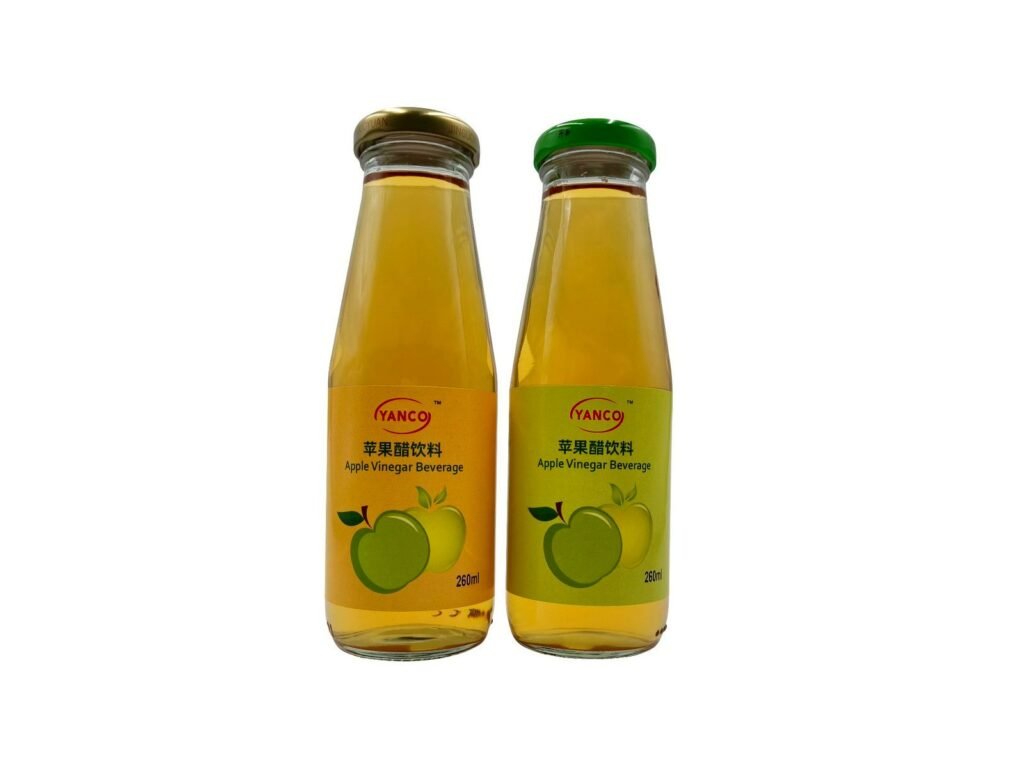
- 260 ml glass: the classic premium format — best shelf presence, highest freight weight.
- PET: lighter and cheaper to ship; popular for high-volume family packs.
- Cans and multipacks: strongest in convenience and food-service channels.
What the label has to carry
Ingredients in descending order, a nutrition panel, best-before date, country of origin and your local-language text. Several markets also regulate claims such as “no added sugar” and any implied health benefit — the wording has to be checked before the bottle is printed, not after.
The cheapest quote usually differs from the most expensive one in three places: vinegar percentage, juice content and bottle weight. Compare those three numbers, not the headline price.
Sampling checklist
Ask for three things from the same production batch: a full bottle for shelf photography, a tasting sample, and the specification sheet with acidity, sugar and shelf life. If you plan private label, send your artwork at the same time — caps, bottles and cartons are all brandable, and the earlier the design is fixed, the cheaper the change.