Black garlic looks like the result of a laboratory process. In fact it is one of the oldest tricks in the kitchen: hold whole garlic bulbs at a warm, humid temperature for weeks, and the cloves slowly turn dark, soft and sweet — with no additives, no colouring and no preservatives involved.
Why the colour changes
During fermentation the sugars and amino acids inside the clove react through what food scientists call the Maillard reaction. The same chemistry that browns bread crust and roasted coffee develops here slowly, over 30 to 60 days. The result is a clove that is jet black, syrupy in texture, and tastes closer to a dried fruit than to raw garlic.
What we control on the line
- Raw material grade: firm, tight-skinned bulbs with no sprouting — soft bulbs ferment unevenly.
- Temperature and humidity: held in a narrow band for the whole cycle; a few degrees of drift shows up as hard cores in the finished clove.
- Time: we stop the cycle on texture and taste, not on the calendar alone.
- Cooling and resting: cloves rest before peeling so the texture sets evenly.
Buyers judge black garlic with their hands first: squeeze the clove. It should give like a soft date and spring back — never crunchy, never wet.
Pack formats for importers
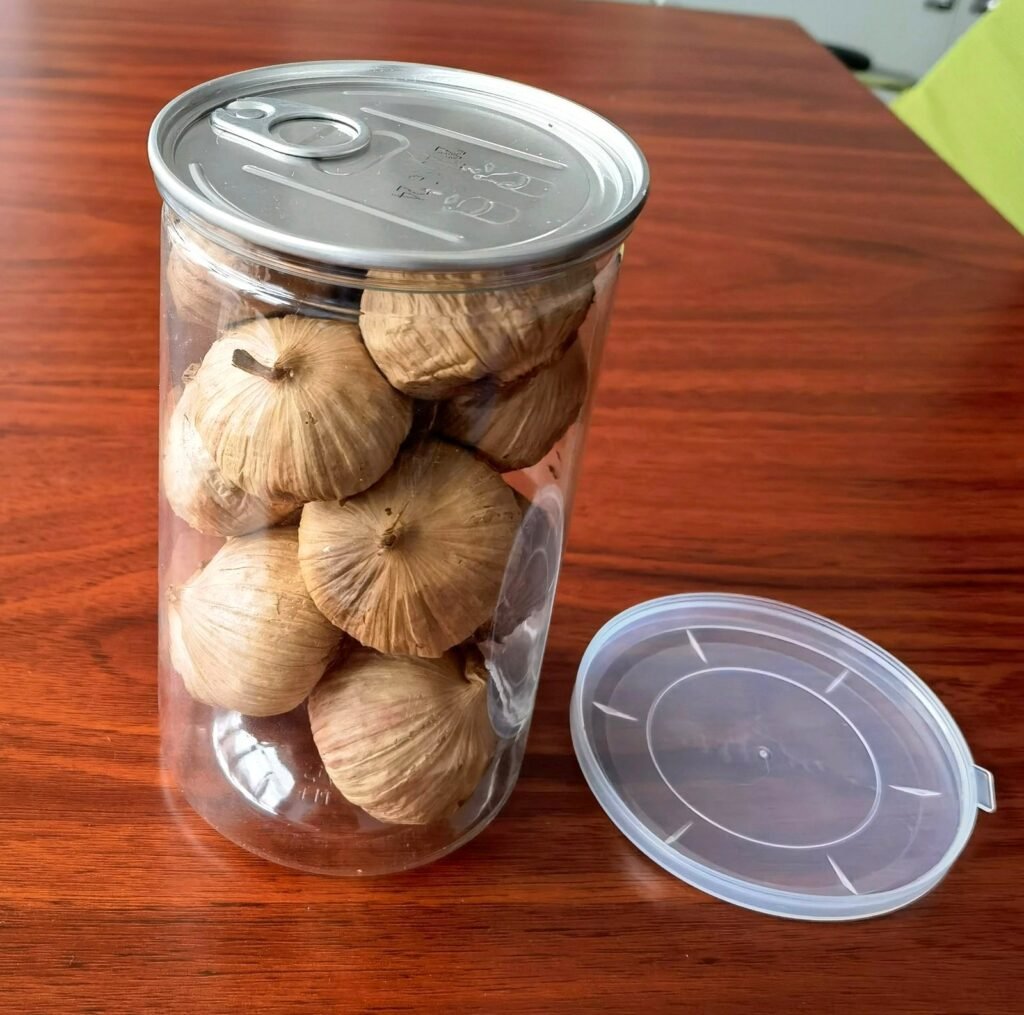
We supply black garlic in 100 g, 250 g and 500 g jars, plus bulk packs for repackers. Peeled cloves, paste and purée are available for food-service customers. Shelf life, storage temperature and label language are set to your market — ambient storage is normal for jars, chilled for paste.
What to put on your label
Most markets treat black garlic as a processed food and expect an ingredient declaration (garlic, nothing else), a nutrition panel, the country of origin and a best-before date. Where a market requires a local-language sticker, we print and apply it in the factory rather than leaving it to your warehouse — one less step in your cost chain.
If you are evaluating black garlic for the first time, ask for two jar sizes and a bulk sample from the same batch. Fermentation is a biological process; consistency between batches matters more than any single spectacular sample.